
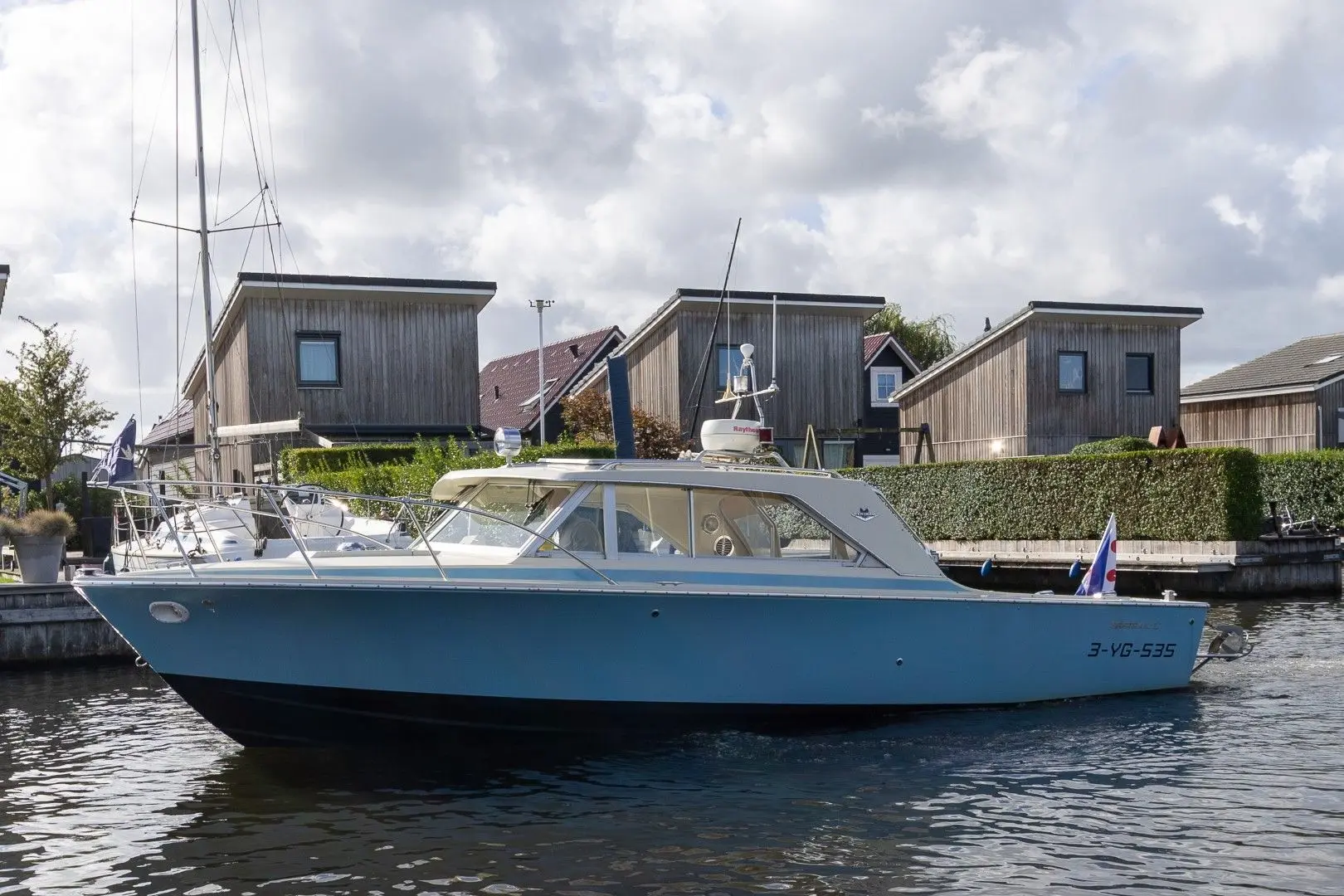
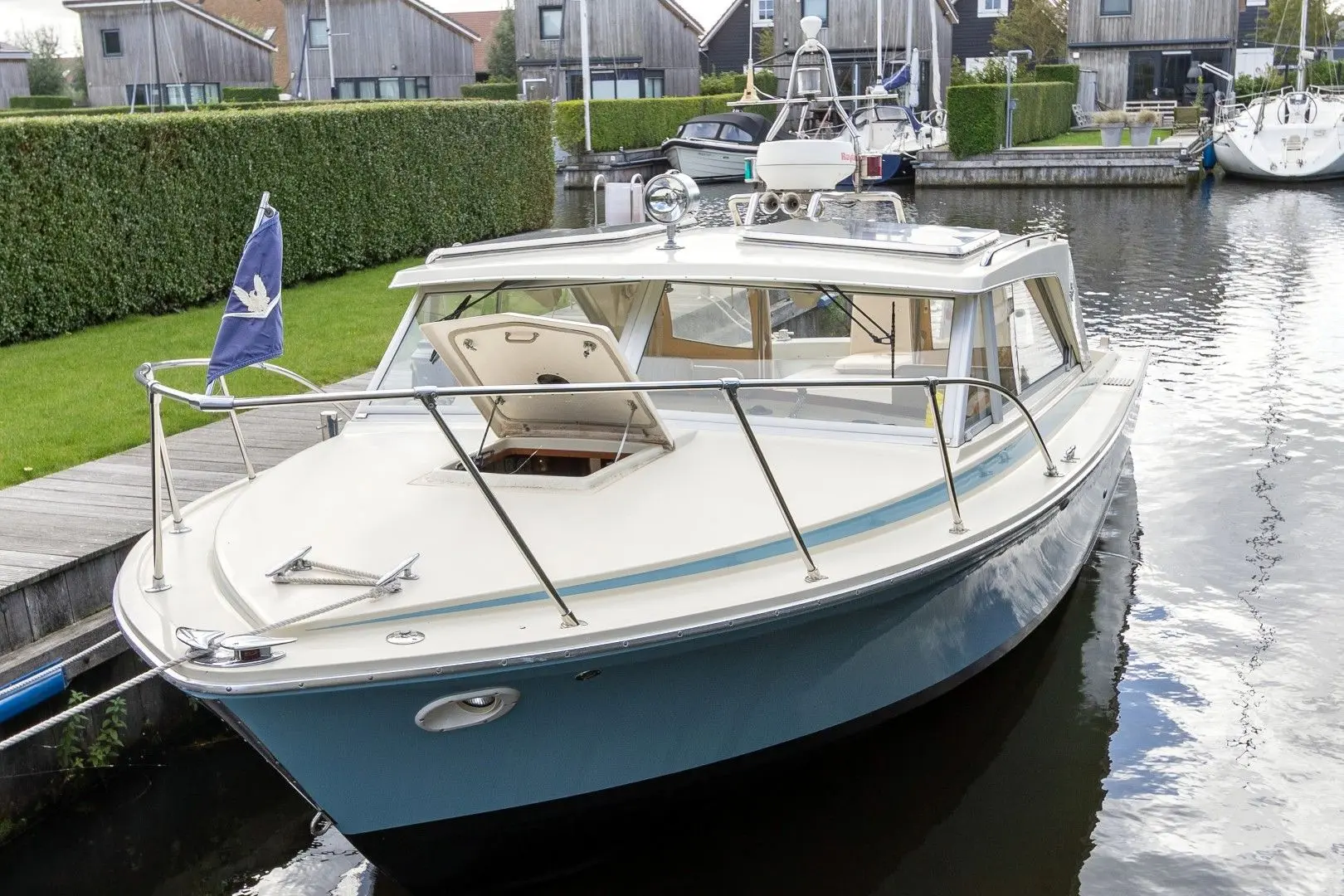
Bertram 26 HT for sale
€ 69.900
1975
8 m x 3.1 m x 0.95 m
Polyester
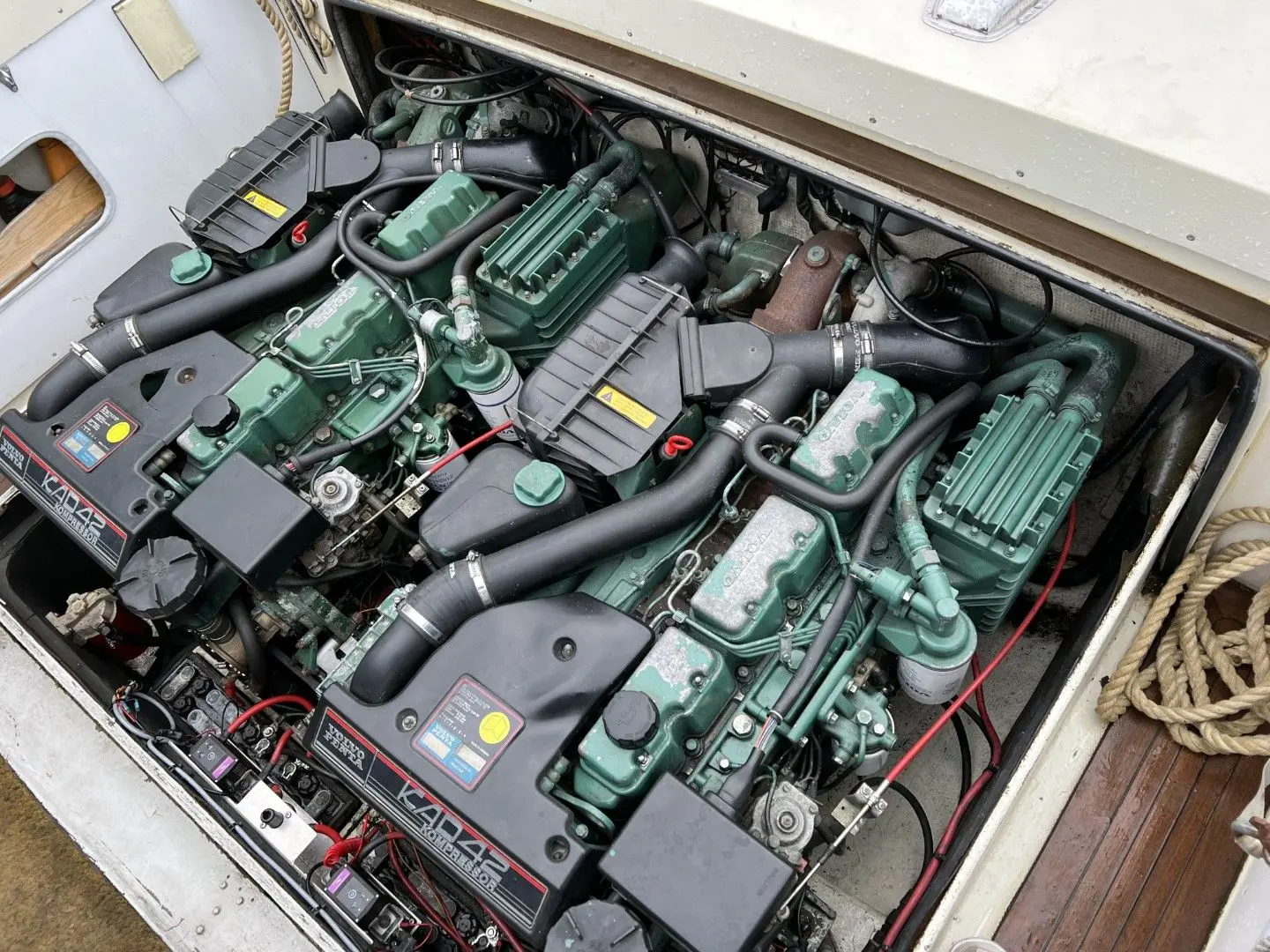
Volvo Penta 2 x KAD42
Heeg
More about the Bertram 26 HT
Bertram 26 HT – An American legend, also in Europe
There is a boat. And there is a Bertram.
Some boats you buy. A Bertram you adopt. If you've ever been to a port in Florida, the Bahamas, or along the American east coast, you know: the name Bertram is whispered there with as much respect as Porsche in Stuttgart or Ferrari in Maranello. Here in Europe, we hardly know it. That's about to change – and you can be one of the first to benefit.
The story begins with a stormy crossing
Miami, 1960. Richard "Dick" Bertram, businessman, sailor and yacht broker, does something no one thought possible. With his wooden racing boat Moppie – named after his wife's nickname – he sails the notorious Miami-Nassau race. Two-meter high waves, 25 knots of wind. Moppie not only wins, she shatters the record and finishes two hours ahead of the first pursuer.
The secret: the revolutionary deep-V design by naval architect C. Raymond Hunt. Where other boats pound and slam through the waves, a deep-V hull cuts through them like a knife. Dick Bertram immediately understands what he has in his hands, founds the Bertram Yacht Company in Miami in 1960, and a year later launches the first production version at the New York boat show: the Bertram 31 "Glass Moppie", in fiberglass – then still a daring choice, now the standard worldwide.
Bertram's deep-V forever changed sport fishing and offshore boating. Some 65 years later, that DNA still sails in every Bertram.
From Miami shipyard to global brand
The Bertram 26 HT dates back to the golden decades of the shipyard:
1960 – Dick Bertram founds the shipyard in Miami; Moppie's race victory makes the deep-V famous.
1961 – The Bertram 31 "Glass Moppie" launches the era of series production; hundreds of "Moppies" are sold.
1968 – Whittaker Corporation acquires the shipyard; the factory grows into one of the world's largest pleasure boat builders. Iconic models follow: the 28, the 46 and 54 Convertible.
The 70s – Exactly the decade when your 26 HT rolled off the line. A back-to-basics offshore boat for men and women who knew what they wanted.
1998 – Ferretti Group (Italy) acquires Bertram; the brand focuses entirely on sportfishers.
2015 – Italian industrialist Beniamino Gavio (Baglietto Group) buys the brand and breathes new life into it.
2022 – Bertram Europe is founded: production and sales from Marina di Carrara, Italy. American DNA, European reach.
The Bertram 26 HT: not a lifestyle accessory, but a tool
What makes this boat so special? Three things.
1. The hull is sacred
The 26 HT carries the classic deep-V-deep-V-hull that made the brand name great: a hull that cuts through the sea with a far lead instead of bouncing on it. Practical fact: forty-year-old Bertram hulls are still refitted and equipped with new engines daily. It's no coincidence that there are entire internet forums (bertram31.com, The Hull Truth) full of enthusiasts who call their classic Bertram "the best boat I've ever had". Hulls of this generation are simply almost indestructible.
2. The hardtop: dry, sheltered, all seasons
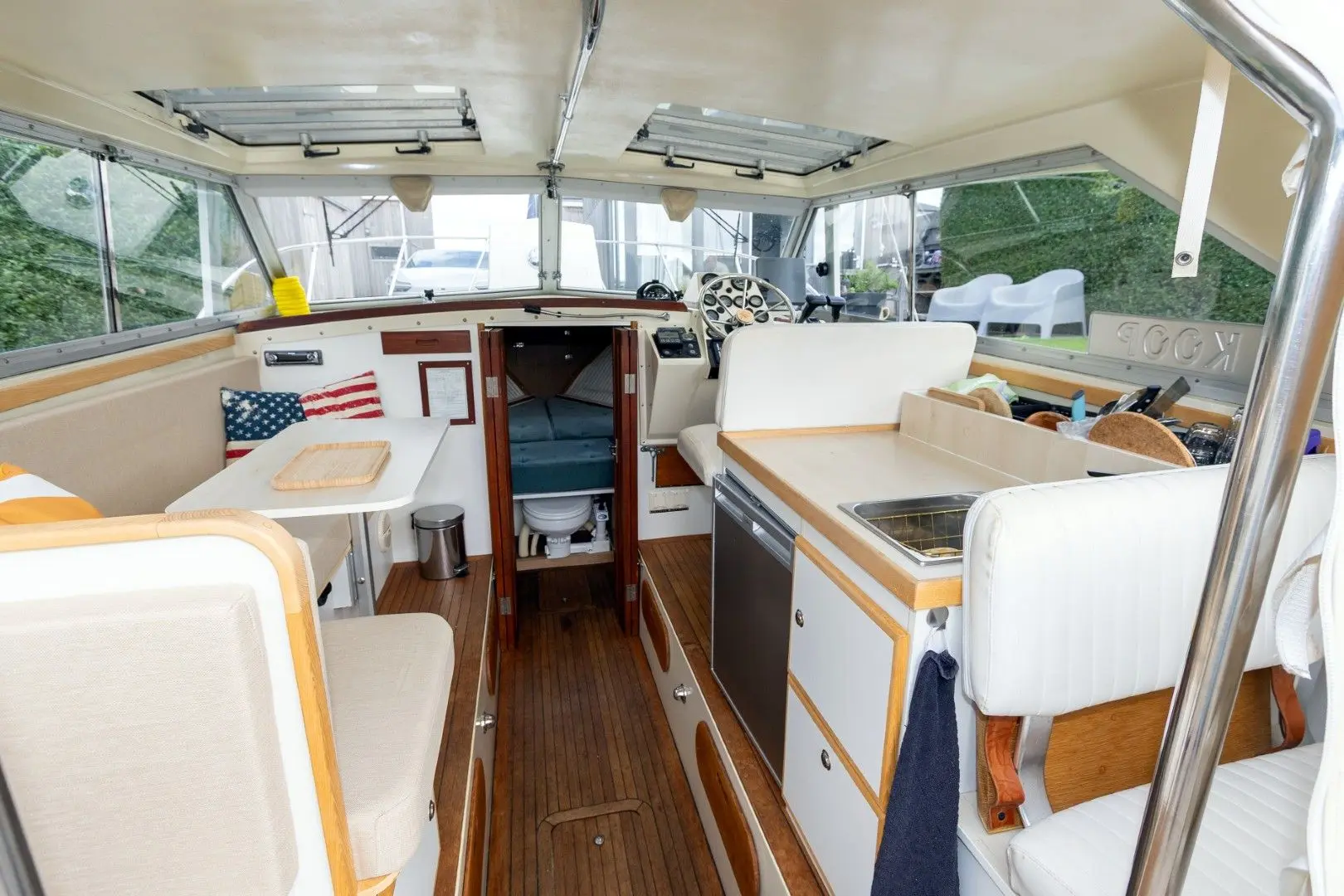
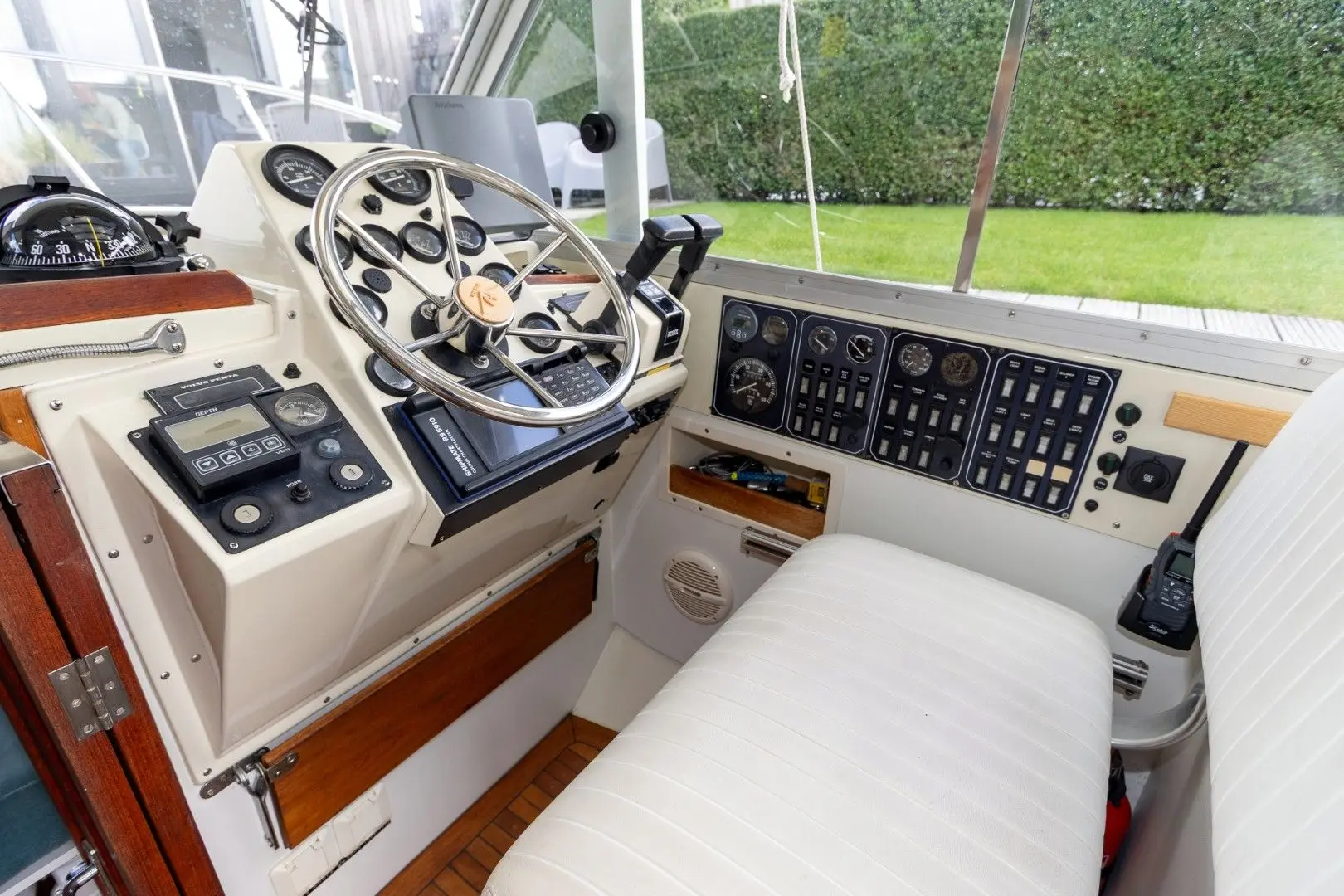
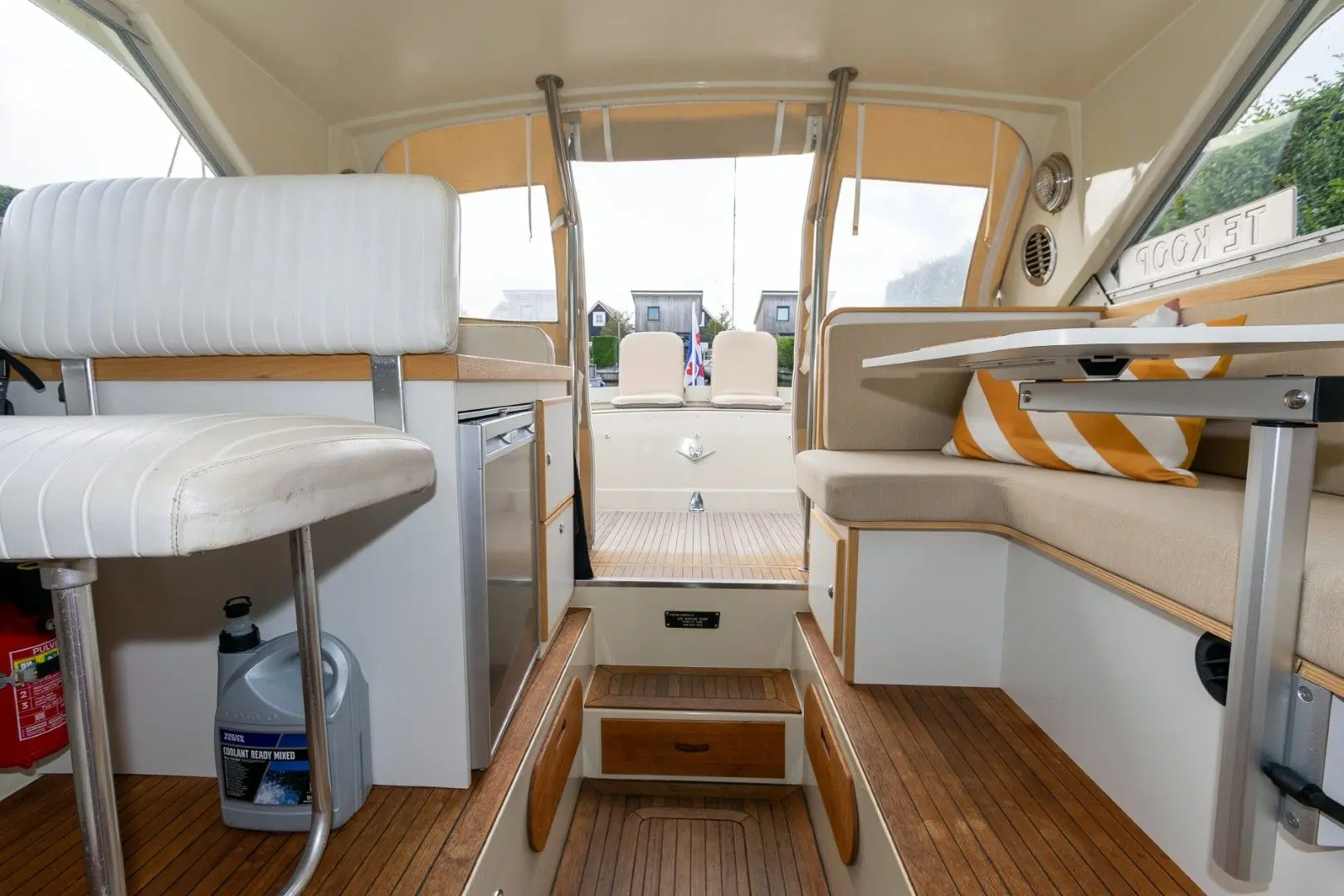
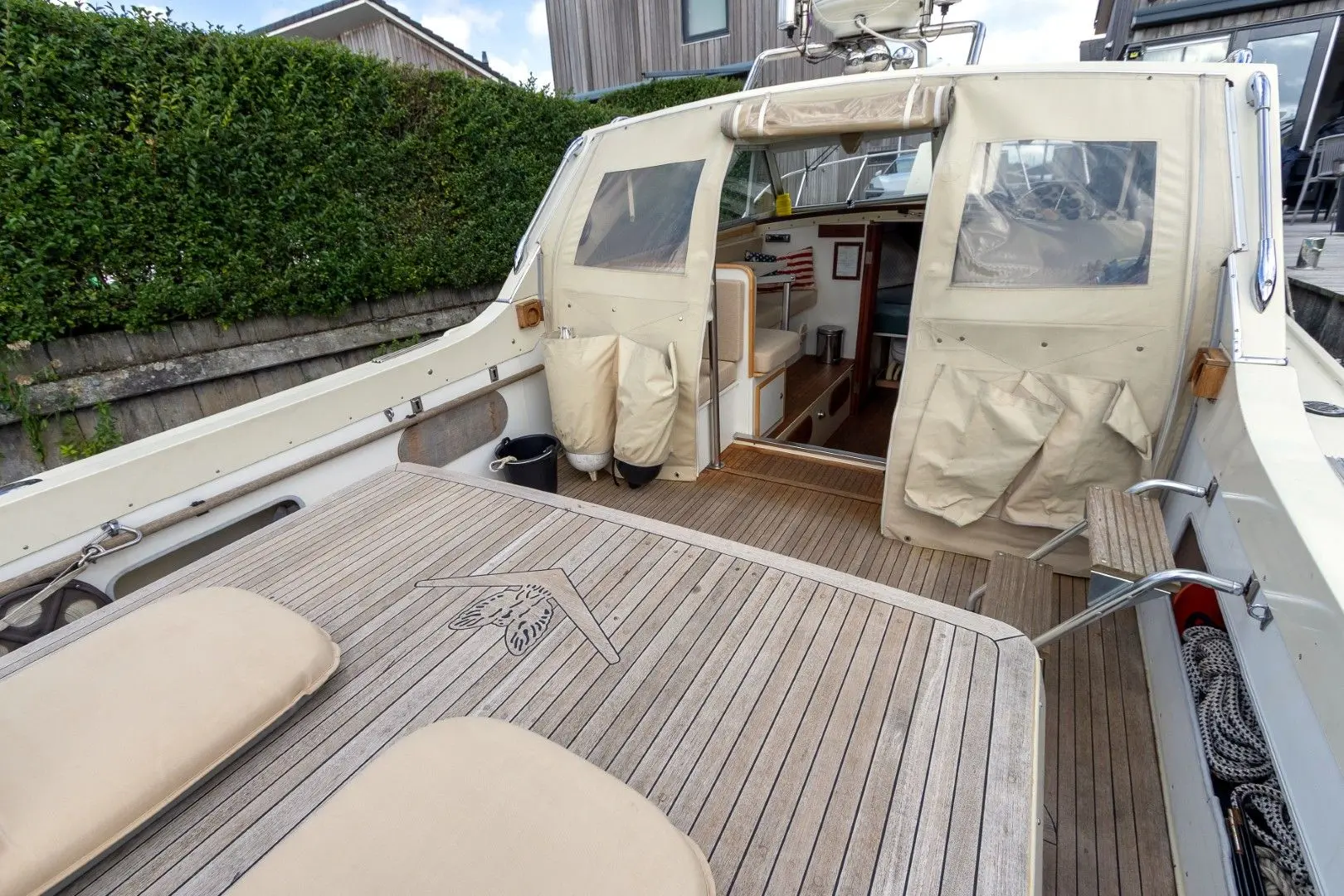
Where the open Moppies are fully exposed to the wind, the HT offers a sturdy hardtop with a sheltered helm and a spacious cockpit. Ideal in the changeable North European climate, or during the journey from the Netherlands via France to the Mediterranean.
3. Charisma with a capital C
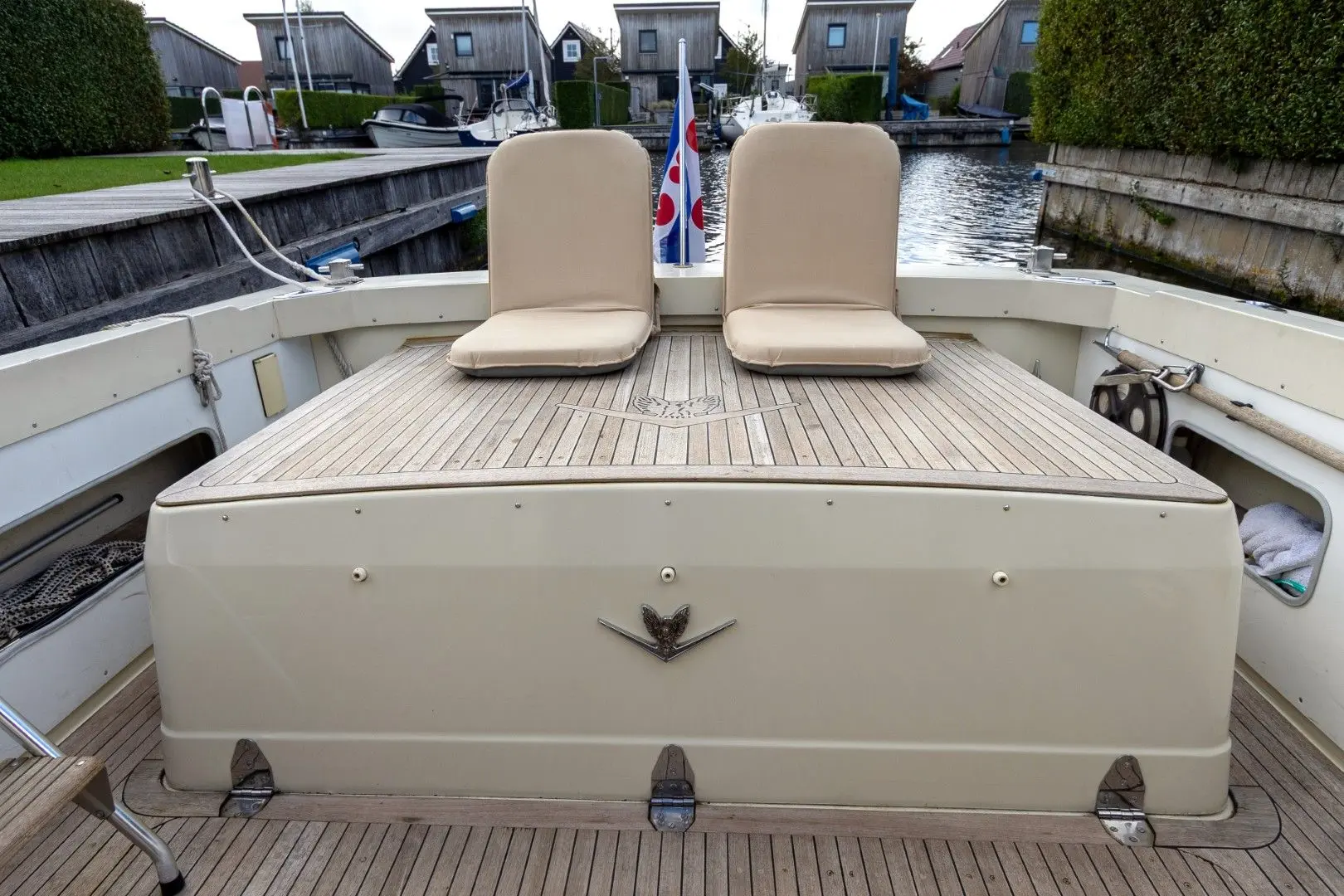
Wide, high-sided, with an enormous cockpit: from the shore, every connoisseur immediately recognizes that this is an offshore boat, not a refurbished speedboat. The 26 HT (also known in the US as the "Caribbean" version) was also built under license in Australia in the 1970s as the "Caribbean 26" – proof that this design proved its worth worldwide.
Technical specifications (typical for the 26 HT)
Feature Specification
Length approx. 7.90-8.00 m (25' 11")
Width approx. 3.00-3.10 m (10 ft)
Hull shape Deep-V, very high deadrise angle (approx. 24–30 degrees)
Construction material Solid polyester, heavily laminated
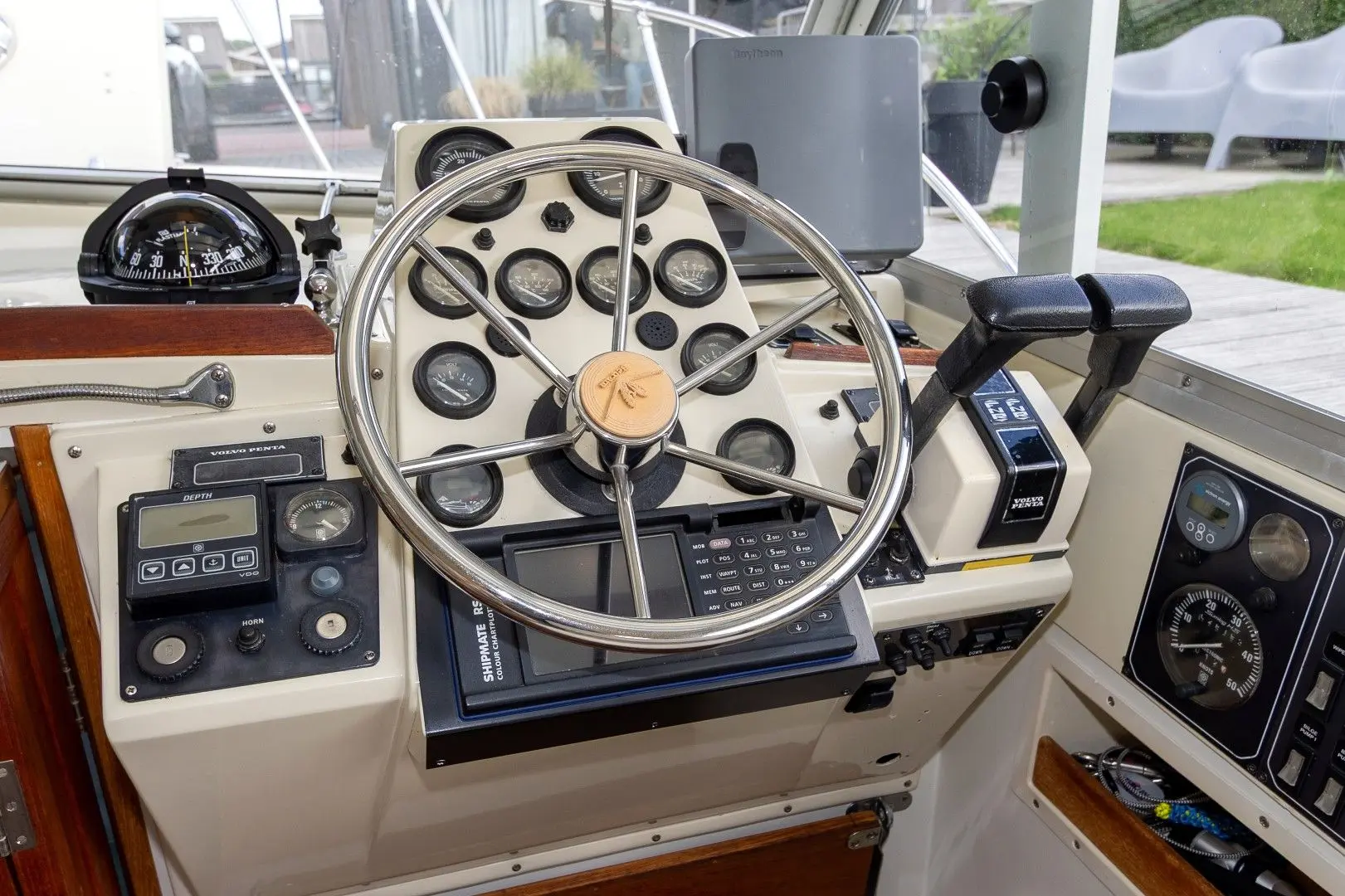
Helm Hardtop with sheltered driver's position
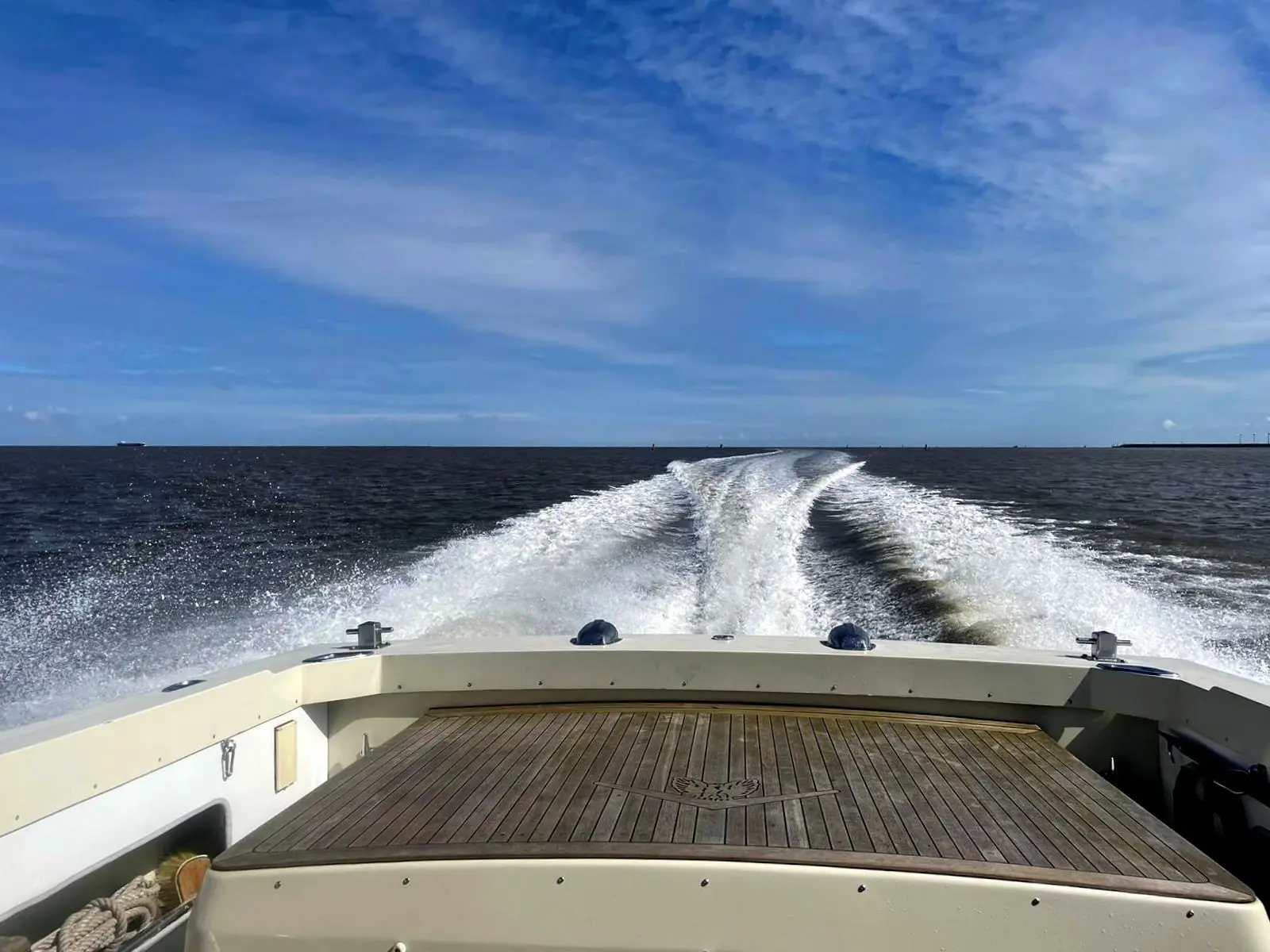
Cockpit Very spacious, self-draining fishing cockpit
Propulsion Typically twin inboards or stern drives
Use Offshore fishing, day trips, overnight stays, heavy seas
Specifications
Interior
Exterior
Engine
Navigation & Electronics
Equipment
Safety
Documents
Disclaimer:
Although utmost care has been taken to ensure the correctness, completeness and topicality of our information, no rights can be derived from it.